
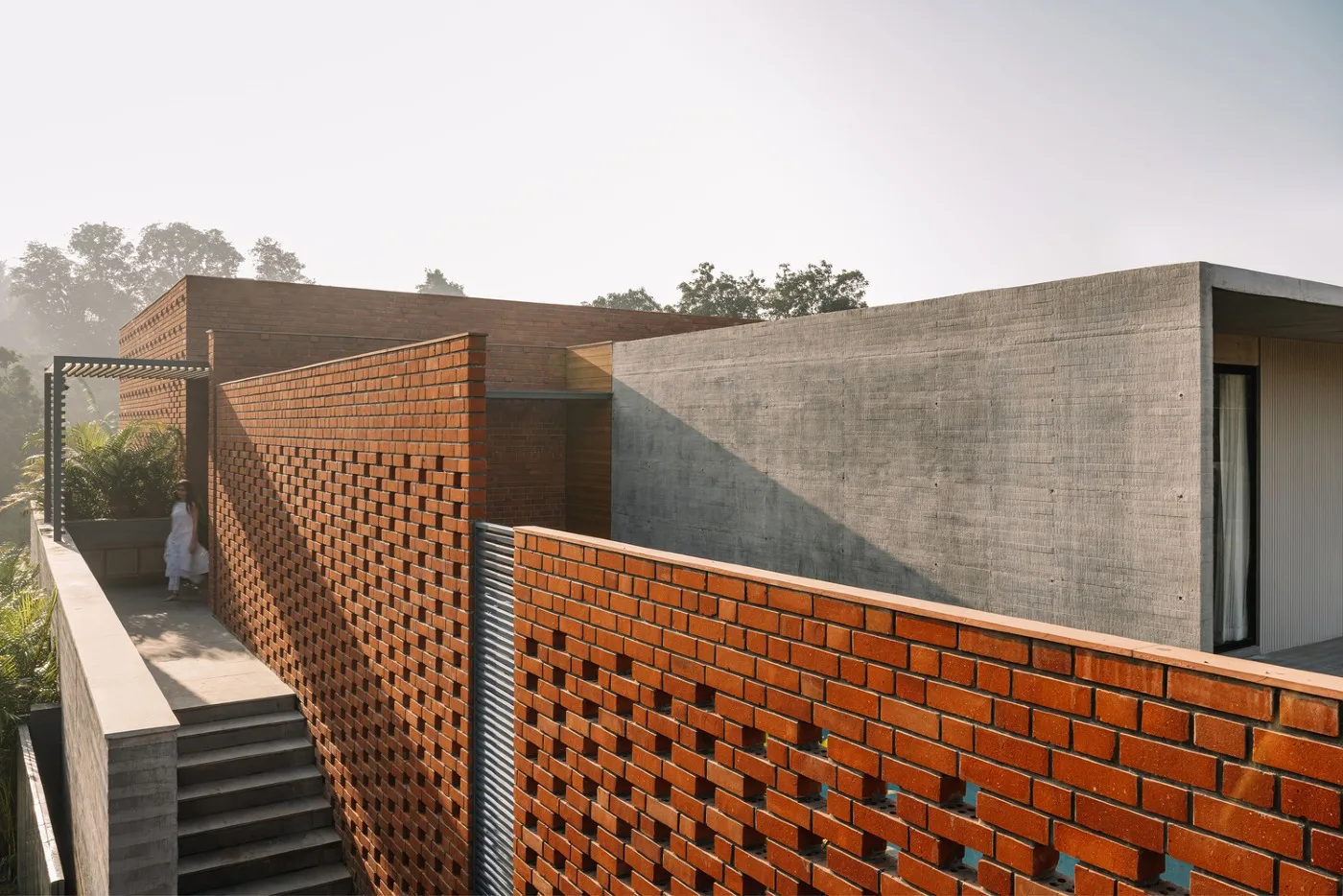
Do exposed brick walls get damaged during Chennai’s heavy monsoon rains? From damp patches and water seepage to white salt stains and weakened mortar joints, prolonged rainfall and high humidity can affect exposed brick walls without proper protection. Poor drainage, cracks in mortar joints, and continuous exposure to rainwater may increase moisture-related problems and affect the wall’s natural appearance over time. Understanding these risks and choosing suitable waterproofing methods can help homeowners protect their brickwork while maintaining its original texture and character.
Heritage Bricks offers brick and cladding solutions for creating attractive exterior walls that complement modern and traditional architecture. To maintain the beauty of exposed brickwork during Chennai’s monsoon season, proper installation, effective drainage, suitable breathable water-repellent treatments, and regular maintenance are important. In this guide, we explore common monsoon-related problems affecting exposed brick walls, practical waterproofing methods, and essential maintenance tips to help keep your exterior walls looking beautiful for years.
Can Exposed Brick Walls Get Damaged During Chennai Monsoon?
Yes, exposed brick walls can develop moisture-related problems during Chennai's monsoon season. However, the extent of damage depends on the type of brick, the quality of mortar joints, the wall construction, the amount of rain exposure, and the effectiveness of drainage and waterproofing details.
Bricks and mortar can absorb some water when exposed to prolonged rainfall. Strong winds can also push rainwater towards small gaps, cracks, poorly finished joints, and openings around windows and doors.
When moisture repeatedly enters a wall without sufficient opportunity to drain or dry, it may cause problems such as damp patches, white salt deposits, surface staining, deteriorating mortar joints, and water seepage into adjoining interior spaces.
This does not mean that exposed brick is unsuitable for Chennai buildings. With appropriate product selection, proper construction, and regular inspection, exposed brick walls can remain attractive and perform well over time.
The important point is to protect the complete wall system rather than relying only on the visible brick surface.
1. Why Chennai's Monsoon Weather Affects Exposed Brick Walls
Chennai's weather presents several challenges for exterior building materials. Seasonal rainfall, high humidity, and periods of strong wind can expose building façades to considerable moisture.
Exposed brick walls are particularly dependent on good construction details because both the brick units and mortar joints can interact with water.
Here are the most common weather-related concerns.
Heavy Rainfall
Prolonged rain can wet the brick surface and mortar joints. Depending on their absorption characteristics, these materials may take in water during periods of repeated exposure.
If water enters through cracks, defective joints, or poorly protected wall tops, it can travel into the wall assembly and potentially reach interior surfaces.
Wind-Driven Rain
Rain does not always fall vertically. During windy weather, water can be driven against exterior walls and enter through small defects around windows, doors, roof junctions, and masonry joints.
This is why exposed brick walls need suitable detailing around openings and connections, especially on façades that receive direct rain.
High Humidity
Humid conditions can slow the drying of damp surfaces, particularly in shaded locations with limited airflow.
Walls that remain damp for extended periods may develop stains, biological growth in favourable conditions, or deterioration of vulnerable mortar joints.
Poor Drainage
Water dripping from roof edges, overflowing gutters, or collecting on horizontal projections can repeatedly wet the same section of brickwork.
Proper roof drainage, sloped copings, projecting sills, and drip edges can help direct rainwater away from vulnerable surfaces. <Cite refs={["turn735594search22","turn735594search24"]}/>
2. Common Problems Found on Exposed Brick Walls After Monsoon
Recognising early warning signs can help homeowners address moisture problems before they become more serious.
White Patches on Brick Surfaces
White, powdery deposits on brickwork are often called efflorescence. They form when water dissolves soluble salts in masonry and carries them to the surface, where the salts remain after the water evaporates.
Efflorescence may be temporary, but repeated deposits can indicate continuing moisture movement. Simply cleaning the white marks will not solve the underlying problem if water continues to enter the wall.
Damp Patches on Interior Walls
If an exposed brick exterior is part of a wall that separates indoor and outdoor spaces, moisture may appear as damp patches on the interior.
Possible causes include defective mortar joints, cracks, water entering around windows, failed waterproofing details, or leakage from adjoining roofs and terraces.
The source should be identified before applying a coating or repainting the affected area.
Deteriorating Mortar Joints
Mortar joints help hold brickwork together and contribute to the wall's resistance to rain penetration.
Poorly finished, cracked, loose, or eroded joints can provide pathways for water. Repeated wetting and drying may worsen existing defects.
Damaged joints should be assessed and repaired with a compatible mortar before applying any surface treatment.
Dark Stains and Biological Growth
Shaded, persistently damp brick surfaces may develop dark staining or biological growth.
Water runoff from balconies, projecting slabs, roof edges, and window sills can create concentrated wet areas. Improving drainage and reducing repeated wetting is often more effective than cleaning alone.
Peeling Paint or Interior Finish
Where moisture passes through the wall, interior paint, plaster, or decorative finishes may begin to blister, peel, or deteriorate.
This should not automatically be attributed to the exposed brick surface. Roof leaks, plumbing defects, rising damp, and condensation can produce similar symptoms, so diagnosis is important.
3. Is Waterproofing Necessary for Exposed Brick Walls?
Waterproofing requirements depend on the wall's construction, exposure, and intended function.
An exposed brick wall is not necessarily required to have a glossy coating or a completely sealed surface. In many applications, good brickwork, sound mortar joints, appropriate wall thickness, and effective rainwater management are essential parts of long-term performance.
However, additional protection may be appropriate where walls face heavy rain, are highly exposed, or have a history of water penetration.
Before selecting a waterproofing treatment, identify which of the following applies:
- Solid exposed brick wall: Protection depends on the brickwork, mortar, wall thickness, detailing, and condition.
- Brick cladding on a backing wall: The complete cladding system must manage water, including the backing wall, joints, drainage, and any specified weather-resistant layer.
- Brick veneer with a cavity: The cavity, flashing, and drainage openings must be designed and maintained to allow water to escape.
- Decorative brick feature wall: The substrate, top edge, joints, and connections with adjoining materials need suitable protection.
These systems are not interchangeable. A treatment appropriate for one type of wall may be unsuitable for another.
For cladding and veneer systems, building-envelope guidance emphasises drainage, flashing, and protection of the backing wall rather than relying solely on a surface-applied water repellent. <Cite refs={["turn735594search0","turn735594search1","turn735594search4"]}/>
4. Best Waterproofing Methods for Exposed Brick Walls
Choosing the correct waterproofing method is more important than simply applying a product labelled waterproof.
Method 1: Use a Suitable Breathable Water Repellent
A penetrating water repellent may help reduce liquid water absorption on compatible brick surfaces while allowing water vapour to escape. Suitability depends on the product chemistry, the brick's absorption characteristics, and the existing wall condition.
Before application:
- Clean the surface using a method suitable for the brick.
- Repair defective mortar joints and cracks.
- Identify and correct active leaks or drainage problems.
- Allow the wall to dry to the level required by the product manufacturer.
- Test the treatment on a small, inconspicuous area.
- Apply the product according to the manufacturer's instructions.
A penetrating water repellent is not the same as a complete waterproofing system. It cannot reliably compensate for missing flashing, large cracks, defective joints, or water entering from behind the wall.
It is also important to choose a product specifically suitable for exposed masonry and confirm whether it will change the brick's colour or appearance.
Method 2: Repair Cracks and Mortar Joints
Small defects can become entry points for rainwater, particularly on exposed façades.
Inspect the wall for:
- Cracked or missing mortar.
- Gaps around windows and doors.
- Cracks at the junction between brickwork and concrete.
- Defective sealant around suitable movement joints.
- Damaged coping stones and wall caps.
- Loose or damaged cladding units.
Repair materials should be compatible with the original masonry and the type of movement or exposure expected.
For older or historic brickwork, seek specialist advice before repointing or applying a chemical treatment, as inappropriate materials can damage the masonry.
Method 3: Improve Roof and Wall Drainage
Water should be directed away from brick surfaces wherever possible.
Check that roof gutters are clear, downpipes discharge correctly, and water does not repeatedly run down a single section of the façade.
Wall tops, parapets, window sills, and projecting ledges should have suitable slopes and drip details where required. These features help prevent water from collecting on horizontal surfaces or running back towards the wall.
Correcting drainage problems can be more effective than repeatedly coating a wall that continues to receive concentrated runoff.
Method 4: Protect Wall Tops and Exposed Edges
The top of a boundary wall or parapet can be especially vulnerable because rainwater may enter from above.
Suitable coping, capping, sloping surfaces, and drip edges can help shed water away from the masonry.
Connections with roofs, terraces, balconies, and adjoining cladding should be detailed so that water is directed to the exterior rather than into the wall assembly.
Method 5: Use the Correct Wall-System Waterproofing
For newly constructed brick cladding, a suitable wall system may include a weather-resistant barrier, drainage cavity, flashing, and weep openings, depending on the construction type and design requirements.
These elements manage water that passes the outer brick layer and help prevent it from becoming trapped behind the cladding.
The exact system should be designed for the building's structure, climate, and applicable local requirements. A surface coating alone should not be treated as a replacement for these details. <Cite refs={["turn735594search1","turn735594search24"]}/>
5. Should You Apply a Waterproof Coating to Exposed Bricks?
Not every exposed brick wall needs a film-forming waterproof coating.
A thick or unsuitable coating can alter the natural brick appearance and may interfere with drying if moisture becomes trapped within the wall. The risk depends on the coating's properties and the construction of the wall.
For homeowners who want to preserve the natural exposed-brick look, a compatible penetrating water repellent may be worth considering after the wall has been inspected and repaired.
Before choosing a product, ask:
- Is it designed for exposed clay brick and mortar?
- Does it reduce liquid water absorption while allowing suitable vapour transmission?
- Will it change the colour, sheen, or texture of the brick?
- Can it be applied to the existing substrate and mortar?
- How should the surface be prepared?
- What maintenance or reapplication may be required?
- Does the product address the actual cause of the moisture problem?
Avoid applying any treatment over actively leaking, persistently damp, or salt-contaminated masonry without first identifying and correcting the cause.
6. Exposed Brick Walls vs Painted Walls During Monsoon
Homeowners often compare exposed brickwork with painted plastered walls when planning a house exterior.
Both options can perform well when correctly designed and maintained. Neither is automatically waterproof.
FeatureExposed Brick WallPainted Exterior Wall
Appearance | Natural clay colour and visible brick texture | Smooth or textured painted finish
Common maintenance | Inspect mortar joints and brick condition | Inspect paint film, cracks, and underlying plaster
Moisture risks | Water absorption, defective joints, and poor detailing | Cracks, coating failure, and water entry through defects
Waterproofing approach | Suitable masonry treatment and sound wall detailing | Compatible exterior coating and sound substrate detailing
Rainwater management | Requires suitable joints, drainage, and protection at vulnerable details | Requires suitable wall construction, flashing, and water-shedding details
Renovation | May require repointing or compatible masonry treatment | May require crack repair, surface preparation, and repainting
The better choice depends on the project's design, budget, exposure, and maintenance preferences.
Exposed brick is especially appealing when the aim is to retain natural texture and architectural character. Painted walls may be more suitable when a uniform colour finish is preferred.
7. How to Maintain Exposed Brick Walls After Heavy Rain
After periods of heavy rainfall, inspect the wall for new changes rather than immediately applying another waterproofing product.
Look for:
- New white deposits or dark patches.
- Dampness on the interior side of the wall.
- Water stains below windows and balconies.
- Cracked or loose mortar.
- Water pooling near the base of the wall.
- Changes in the condition of previously repaired areas.
If the brick surface becomes dirty, use a cleaning method recommended for the particular brick. Avoid aggressive pressure washing or harsh acids unless a qualified professional confirms that the method is suitable. These approaches can damage mortar joints, erode the surface, or cause unwanted staining.
Allow the wall to dry under suitable conditions and monitor whether the problem returns. Repeated dampness usually requires investigation of the water source rather than repeated cleaning.
If water is entering indoor spaces, electrical installations are affected, or masonry appears loose or structurally damaged, arrange a professional assessment promptly.
8. Common Waterproofing Mistakes to Avoid
Some waterproofing approaches can make exposed brick problems worse when the underlying cause has not been addressed.
Applying a coating without inspecting the wall: A coating may hide the symptoms temporarily while water continues to enter through cracks or defective joints.
Using an incompatible sealant: A product that is unsuitable for clay masonry can affect the appearance or drying behaviour of the wall.
Ignoring roof drainage: Overflowing gutters and poorly detailed wall tops can repeatedly wet the same area even after treatment.
Sealing damp brickwork without diagnosis: Applying a low-permeability coating over wet masonry may interfere with drying.
Assuming brick cladding is fully waterproof: Water can pass through joints or behind cladding, making drainage and backing-wall protection important.
Neglecting window and balcony junctions: These are common areas where water-management details need careful attention.
Using the same treatment on every brick product: Different products have different absorption characteristics and finishes, so treatment suitability should be confirmed first.
A reliable waterproofing plan addresses the source of the water, the condition of the brickwork, and the complete wall construction.
9. How Heritage Bricks Can Help with Your Exposed Brick Project
Heritage Bricks offers brick and cladding options for residential and commercial architectural applications. When planning an exposed-brick façade in Chennai, choosing a product suitable for the intended application is an important starting point.
Before finalising a brick or cladding product, consider the following:
- The intended use of the product, whether for a wall, façade, or decorative feature.
- The appearance and texture required for the project.
- The exposure to direct rainfall and coastal conditions.
- The substrate and fixing or bonding method.
- The necessary joints, drainage, and weather-protection details.
- The cleaning and maintenance requirements.
For existing walls that show signs of dampness, consult a qualified building professional to identify the source of water before choosing a waterproofing treatment.
For new projects, plan water management and weather detailing from the beginning. This can help reduce avoidable repairs and preserve the appearance of the finished exterior.
Frequently Asked Questions
Do exposed brick walls get damaged during Chennai monsoon?
They can develop moisture-related issues if the bricks absorb excessive water, mortar joints are defective, or rainwater enters through poorly detailed areas. Proper construction, drainage, and maintenance help reduce these risks.
Are exposed brick walls waterproof?
No. Brick and mortar can absorb water, and joints or cracks may allow rainwater to penetrate. Their resistance to water depends on the masonry, wall construction, and weather-protection details.
Which waterproofing treatment is best for exposed brick walls?
The suitable treatment depends on the wall's condition and construction. A compatible penetrating water repellent may help reduce surface water absorption, while cracks, defective joints, flashing, and drainage problems need appropriate repairs.
Can I apply waterproofing chemicals directly to exposed bricks?
Some products are designed for direct application to suitable masonry, but the surface must be prepared according to the manufacturer's instructions. Test a small area first and confirm that the product is compatible with the brick and mortar.
Why do exposed brick walls develop white patches after rain?
White deposits are often caused by efflorescence, which occurs when moisture carries soluble salts to the brick surface. If the deposits keep returning, investigate the moisture source rather than cleaning the marks alone.
How can I prevent dampness on interior walls behind exposed brick?
Check for leaking roofs, defective window flashing, cracked joints, drainage issues, and other possible sources of water. The correct repair depends on whether moisture is entering from the exterior, rising from the ground, or coming from another source.
Does exposed brick cladding need waterproofing?
The requirement depends on the product and the wall assembly. Exterior cladding should be designed with suitable water-management details, including appropriate backing protection, drainage, and flashing where required.
Can waterproofing change the colour of exposed bricks?
Yes. Some treatments can darken the surface, add sheen, or alter the appearance. Always check the product specifications and test a small, inconspicuous section before treating the entire wall.
When should exposed brick walls be inspected?
Inspect them before the monsoon, after significant rainfall if problems are suspected, and periodically as part of normal building maintenance. Address cracks, loose units, or recurring dampness promptly.
Protect Your Exposed Brick Walls with the Right Approach
Exposed brick walls can bring warmth, texture, and lasting architectural character to Chennai homes. However, the monsoon season makes it important to pay attention to water absorption, mortar joints, drainage, and the details around windows, roofs, and wall tops.
The most effective waterproofing strategy is not simply to cover the brick surface with a coating. It is to identify how water enters the wall, repair defects, direct rainwater away from vulnerable areas, and use a compatible treatment where appropriate.
Whether you are planning a new exposed-brick façade or maintaining an existing property, Heritage Bricks can help you explore brick and cladding options for your architectural project. Confirm the product's intended application and technical requirements before installation.
Contact Heritage Bricks
Website: https://www.heritagebricks.in/
Phone: +91 99402 75111
Head Office
No. 106-1A2, Sivabhootham Village, Vanagaram, Maduravoyal, Vanagaram, Tamil Nadu – 600095.
Office Operated
No. 80, Sarjapura Main Road, Sulikunte, Dommasandra, Bengaluru – 562125.
Related Posts
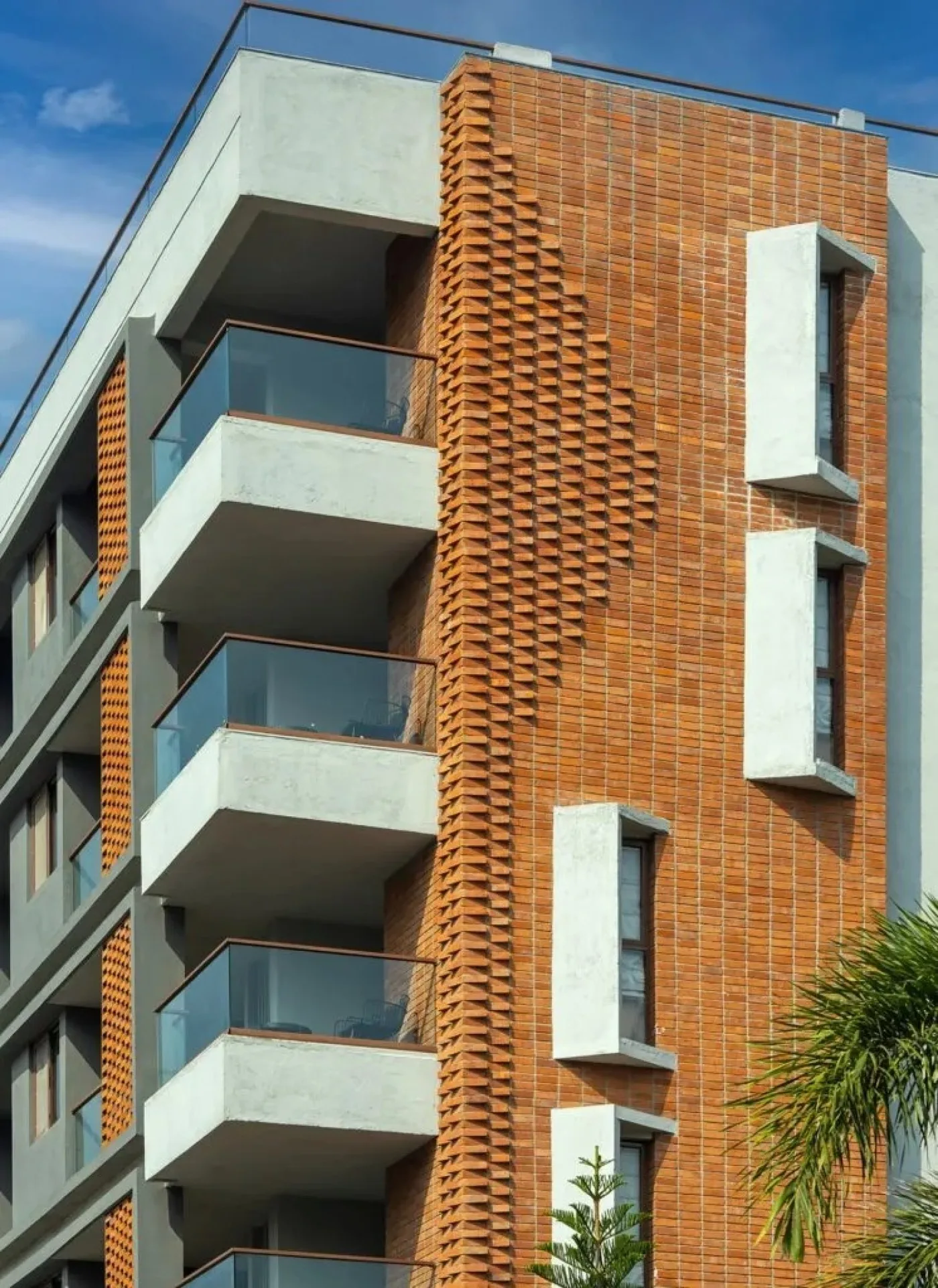
25 Exposed Brick Elevation Designs for Chennai Homes
Explore 25 exposed brick elevation designs for Chennai homes, including modern villas, duplexes, compact houses, and traditional Chettinad-inspired facades. Discover brick and cladding ideas, material selection tips, maintenance advice, and exterior design inspiration with Heritage Bricks.
Read More
Wire Cut Bricks vs Red Bricks vs Fly Ash Bricks – Complete Comparison
Compare wire cut bricks, traditional red bricks and fly ash bricks with this complete guide from Heritage Bricks. Explore the differences in strength, appearance, water absorption, cost and suitability to choose the right bricks for your home or commercial construction project.
Read More
Exposed Brick Wall Cost in Chennai 2026 – Material and Labour Breakdown
Explore exposed brick wall cost in Chennai for 2026 with Heritage Bricks. Learn about material prices, labour charges, brick cladding options and budgeting tips for your home or commercial project.
Read More